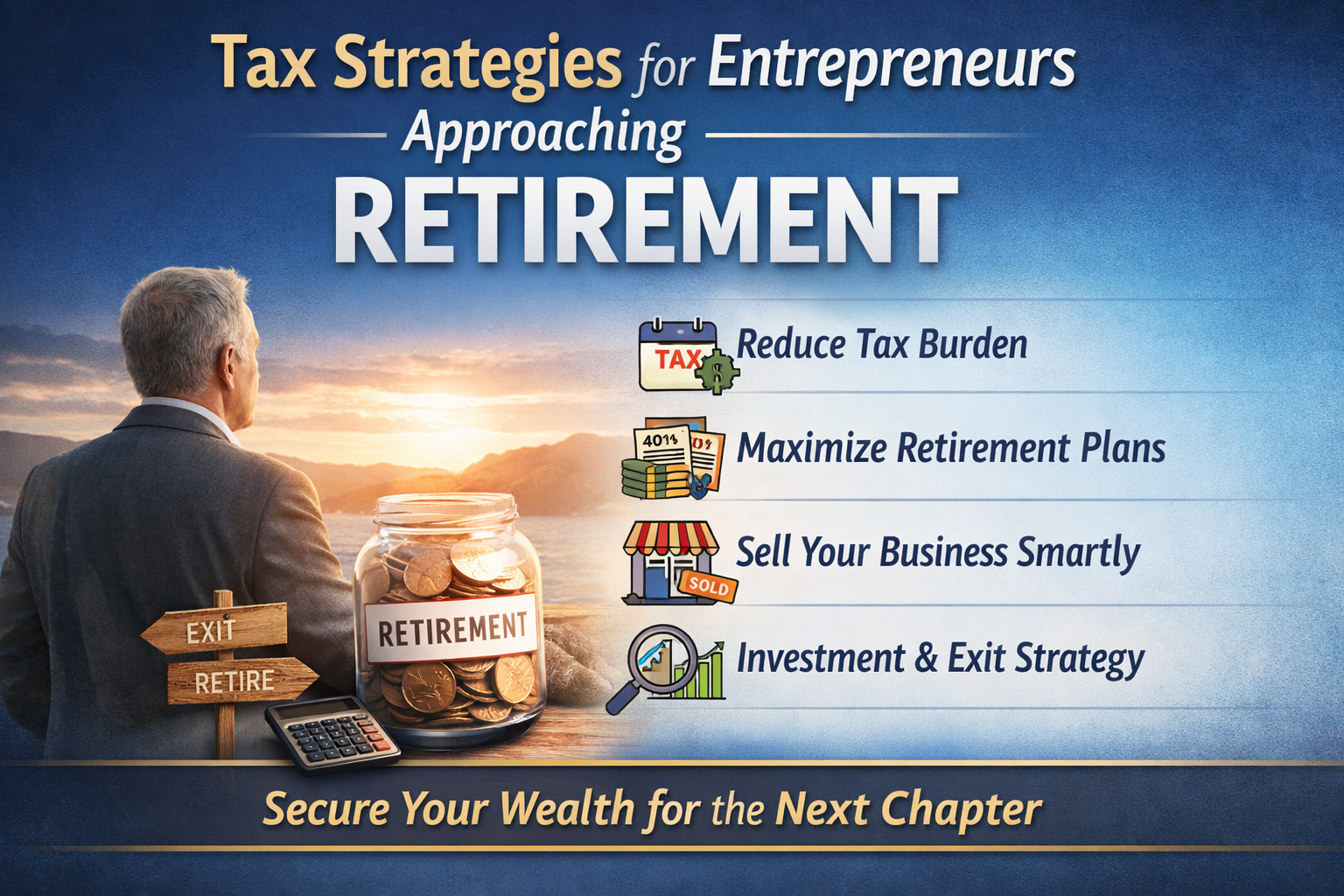
For entrepreneurs, approaching retirement is not just about stepping away from the business—it’s about transitioning wealth efficiently.
Years of building a business often result in complex financial structures, and without proper tax planning, a significant portion of that wealth can be lost unnecessarily.
The right tax strategies can help preserve what you’ve built, create income efficiency, and support a smoother transition into retirement.
Why Tax Planning Becomes Critical Near Retirement
As retirement approaches, financial decisions carry greater impact.
At this stage:
- Income is often at its peak
- Business value is highest
- Exit or transition decisions are approaching
Without planning, tax liabilities can significantly reduce long-term wealth.
Tax strategy is no longer optional—it becomes essential.
Key Tax Strategies to Consider
1. Key Tax Strategies to Consider
Strategically managing when income is received can reduce overall tax exposure.
This may include:
- Deferring income into lower-tax years
- Spreading distributions over time
- Coordinating withdrawals with retirement timing
2. Maximizing Retirement Contributions
Entrepreneurs have access to retirement structures that allow higher contributions.
Options may include:
- 401(k) plans
- SEP IRA
- Cash Balance Plans
These not only build retirement savings but also reduce taxable income.
A Strategic Shift: From Growth to Efficiency
Earlier in your career, the focus may have been on growth and expansion.
As retirement approaches, the focus shifts towards:
- Preserving wealth
- Reducing tax exposure
- Creating sustainable income
This transition requires a different financial approach—one that prioritizes efficiency over accumulation.
Planning for Business Exit
Selling or transitioning a business can trigger significant tax consequences.
Planning ahead can help:
- Structure the sale efficiently
- Spread tax liability over time
- Reduce capital gains impact
Without preparation, a large portion of proceeds may be lost to taxes.
Utilizing Entity and Ownership Structures
The way your business is structured affects how income is taxed.
Strategic adjustments may help:
- Optimize income distribution
- Reduce tax burden
- Improve long-term efficiency
This becomes especially important during transition planning.
Coordinating Investment and Tax Strategy
Investment decisions should align with tax planning.
This includes:
- Managing capital gains
- Structuring portfolios for tax efficiency
- Aligning withdrawals with income strategy
A disconnected approach can lead to unnecessary tax exposure.
Common Mistakes to Avoid
Entrepreneurs often:
- Delay tax planning until the final years
- Focus only on income, not tax efficiency
- Overlook the tax impact of business exit
- Fail to coordinate across financial areas
These mistakes can significantly reduce retirement outcomes.
The Role of Strategic Guidance
Working with a financial planning advisor ensures that tax strategies are aligned with your broader financial plan.
This includes:
- Coordinating business, investment, and retirement decisions
- Identifying opportunities for tax efficiency
- Creating a structured transition plan
Complex decisions require structured guidance.
When to Start Planning
Ideally, tax planning should begin:
- 3–5 years before retirement
- Before any business sale or transition
- When income reaches higher levels
Starting early provides more flexibility and better outcomes.
Final Thoughts
Tax strategies for entrepreneurs approaching retirement are not just about minimizing taxes—they are about protecting the value of everything you’ve built.
With the right planning, it’s possible to transition into retirement with clarity, efficiency, and confidence.
Post Disclaimer
All opinions and views expressed by Farther are current as of the date of this writing, are for informational purposes only, and do not constitute or imply an endorsement of any third-party’s products or services.
The information provided does not take into account the specific objectives, financial situation, or the particular needs of any specific person and therefore should not be relied upon as investment advice or recommendations. Neither does it constitute a solicitation to buy or sell securities, nor should it be considered specific legal, investment or tax advice.
Finally, investing entails risk, including the possible loss of principal, and there is no assurance that any investment will provide positive performance over any period of time.