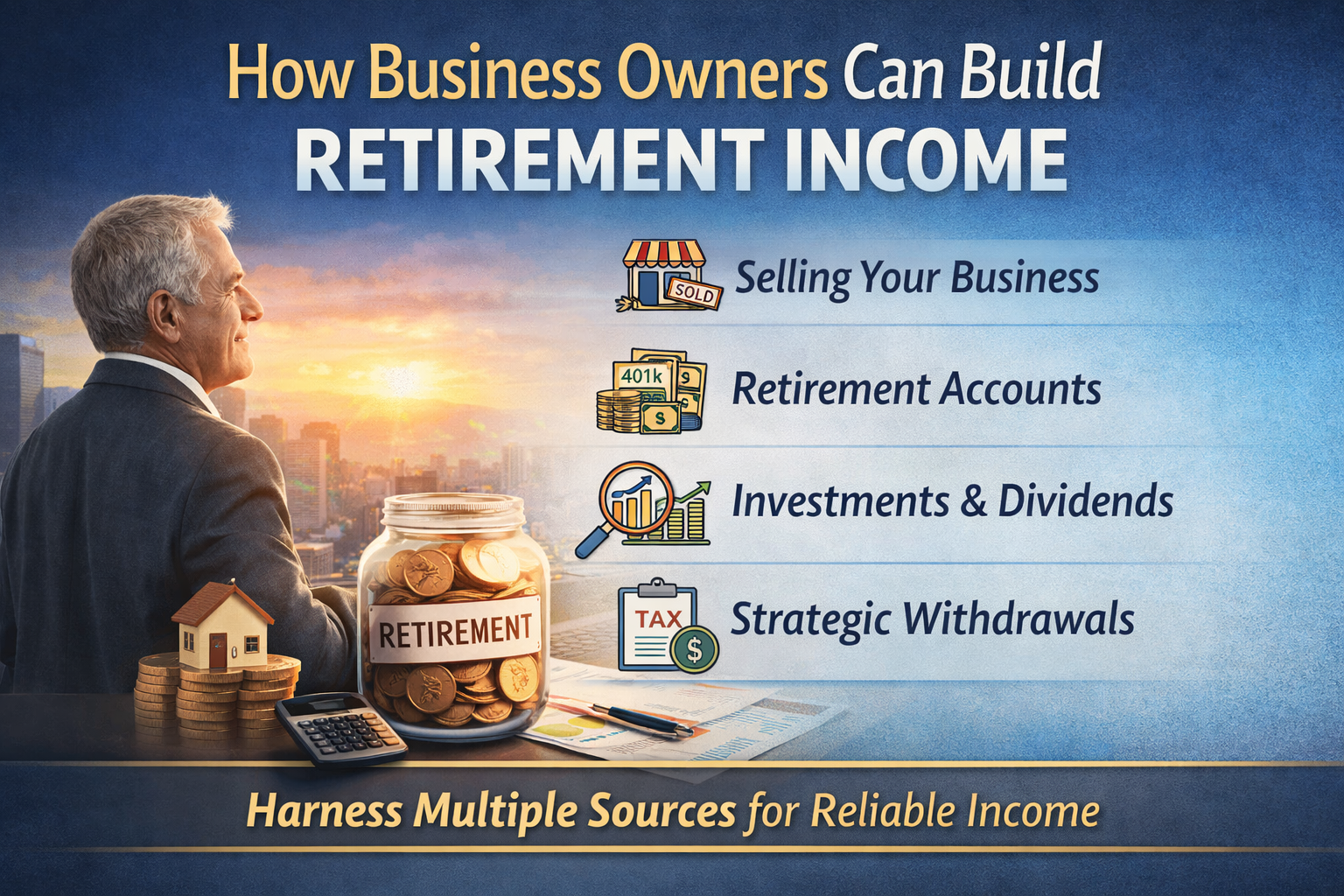
If you’re a small business owner who wants to grow wealth, protect your income, and cut your taxes, this video points you toward a strategy that is often overlooked: retirement plan design that works for you and your business at the same time. The focus keyword here is wealth, and that’s exactly what this conversation is about — not just saving money, but building real financial strength for your future.
Shorts content like this can be brief, but the ideas have weight. The video highlights a less common retirement planning tool that can deliver both tax savings and high contribution potential. Let’s unpack it in a clear, practical way so you know what it is, how it works, and whether it fits your business goals.
The Core Idea: Use Retirement Plans to Build Wealth
Most small business owners look at retirement plans as tax shelters or benefits they “have to offer” employees. But there’s another way to think about them:
- Retirement plans can be a strategic wealth-building vehicle for you, not just a cost center.
- Certain plans let you put a lot more money into a tax-advantaged account each year than traditional options.
- You can reduce current tax burden while stacking savings fast.
In the video, the focus isn’t on a standard 401(k) or IRA. Instead, the host is talking about defined benefit retirement plans— a type of pension plan that lets you make big contributions in a single year if you’re maximizing savings.
What Is a Defined Benefit Plan (Explained Simply)
Here’s the key:
- A defined benefit plan promises a specific payout at retirement.
- The plan is set up based on actuarial formulas. That determines how much must be contributed each year to reach that promised benefit.
- Because the contribution is tied to the guaranteed benefit, it can be much higher than other retirement plans.
This means:
- You can save aggressively over a short period (much more than a typical 401(k)).
- Those contributions are tax deductible.
- You get growth inside the plan on a tax-deferred basis until you retire.
For some business owners paying high tax rates, this can be one of the largest deductions you’ll ever take. It’s not a gimmick — it’s IRS-approved planning.
How This Builds Wealth
A defined benefit pension isn’t just about saving for retirement.
Here’s how it builds wealth for business owners:
- Massive Retirement Contributions
- You can contribute significantly more than the limits of a 401(k) or SEP-IRA.
- Bigger annual contributions means more capital growing tax-deferred.
- Current Year Tax Savings
- Contributions are immediately deductible against your business income.
- That reduces your income tax bill today, not just years down the road.
- Compound Growth Inside the Plan
- Growth inside a pension plan compounds without annual tax drag.
- When rolled out at retirement, you choose how and when to take the benefit.
- That gives you control over timing and tax brackets later.
- Flexibility for High Earners
- If your business income varies year to year, a structured plan lets you adjust.
- Strong years = big contributions. Slow years = lower contributions (as long as you follow actuarial rules).
Comparison: Defined Benefit vs 401(k)
It’s worth a quick side-by-side so you can see the difference.
| Feature | Defined Benefit Plan | 401(k) Plan |
|---|---|---|
| Max Contribution | Very high (actuarial formula) | ~$66k max (2026 limits) |
| Tax Deduction | Full contribution is deductible | Deductible up to limits |
| Growth | Tax-deferred | Tax-deferred |
| Complexity | High (need actuary & admin) | Lower |
| Best For | High saving owners | General retirement savings |
Defined benefit plans require support from a professional (an actuary and retirement plan administrator). They are not DIY. But for the owner who wants to save big, they beat standard plans.
When It Makes Sense
A defined benefit plan isn’t right for everyone. It works best when:
- Your business earns enough that you can allocate a large amount of income after expenses.
- You want a big reduction in taxable income in high-earning years.
- You plan to save aggressively for retirement.
- You’re willing to set up and maintain a more complex plan (it’s not a simple 401(k)).
If you’re just starting or your income is minimal, there are better, simpler plans. But if you’re paying serious taxes and want to push wealth building hard, this is worth evaluating.
Action Steps You Can Take
Here’s how you go from idea to real plan:
1. Track Your Current Business Income & Tax Bill
You need baseline numbers before you make choices.
2. Talk to a Retirement Plan Specialist or Actuary
A defined benefit plan must be set up with professional help.
3. Review Plan Options Side-by-Side
Ask for a projection comparing:
- Defined benefit plan
- Solo 401(k)
- SEP-IRA
This highlights which gives the best outcome for your situation.
4. Run Scenarios
Look at:
- Cash flow impact
- Tax impact
- Retirement income outcome
5. Make a Decision
Based on numbers and your business goals.
A Warning (Only if You Need It)
These plans accelerate your contributions and tax deductions, but they are regulated.
You must:
- Meet IRS funding requirements.
- File annual reports.
- Work with actuaries.
They are powerful, but they can bite if set up incorrectly. That’s not a reason to avoid them — just a reason to bring experienced help into the process.
Final Thoughts
Small business owners often think wealth building comes only from cutting expenses or boosting revenue. But the smart ones know retirement plans can be strategic wealth tools.
The video highlights that defined benefit retirement plans can let you:
- Put more money away.
- Get a bigger current-year tax break.
- Grow savings faster than traditional retirement accounts.
If you want to build wealth and not just save for retirement, give this strategy attention. Evaluate it with professional guidance. And don’t assume a 401(k) is the best tool just because it’s common.
Your retirement and tax plan should be designed to work with your business — not just placed on the shelf.
Post Disclaimer
All opinions and views expressed by Farther are current as of the date of this writing, are for informational purposes only, and do not constitute or imply an endorsement of any third-party’s products or services.
The information provided does not take into account the specific objectives, financial situation, or the particular needs of any specific person and therefore should not be relied upon as investment advice or recommendations. Neither does it constitute a solicitation to buy or sell securities, nor should it be considered specific legal, investment or tax advice.
Finally, investing entails risk, including the possible loss of principal, and there is no assurance that any investment will provide positive performance over any period of time.